You wrap up a great day. Maybe you helped a friend, hiked a trail, or finished a big project.
You go to post a photo and type: “Day well spent.” Then you pause — is that even correct?
The short answer:
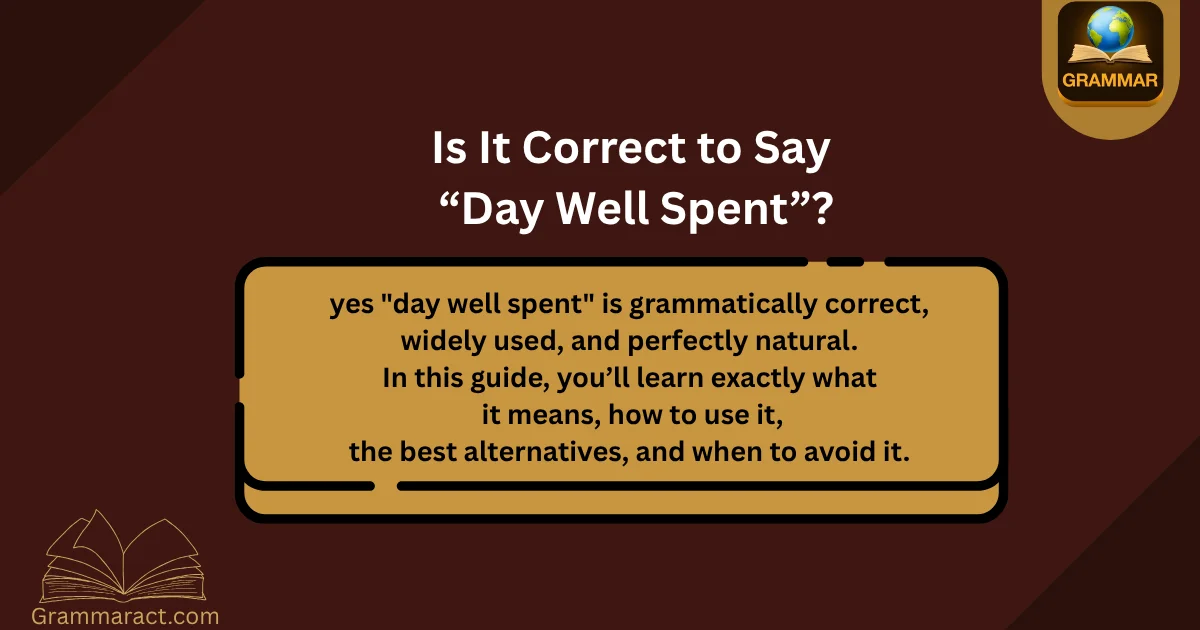
| yes “day well spent” is grammatically correct, widely used, and perfectly natural. |
| In this guide, you’ll learn exactly what it means, how to use it, |
| the best alternatives, and when to avoid it. |
What Does “Day Well Spent” Mean?
At its core, “day well spent” meaning is simple. It describes a day that felt worthwhile, fulfilling, and meaningful — not just busy.
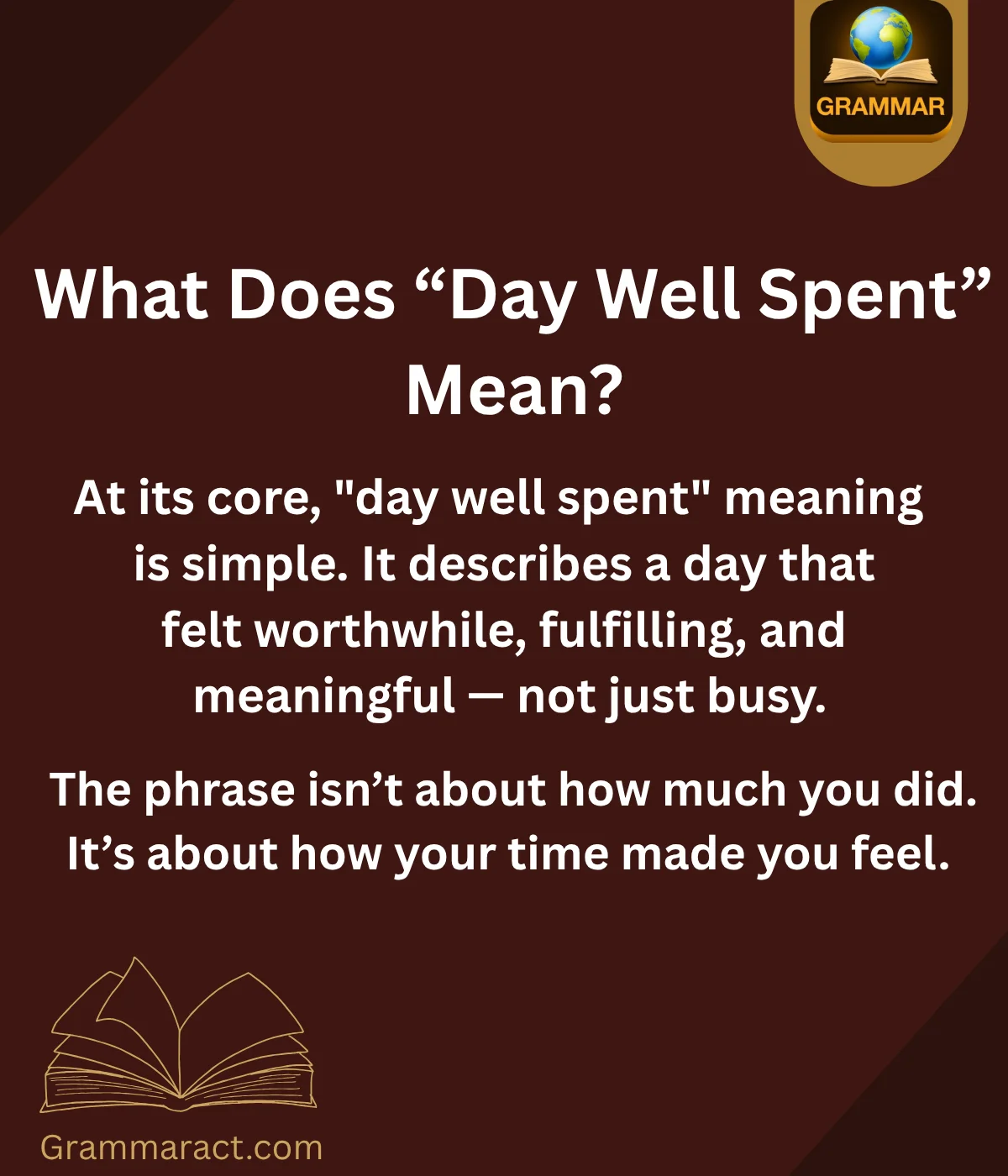
The phrase isn’t about how much you did. It’s about how your time made you feel. Whether you volunteered, rested, learned something new, or laughed with loved ones — it qualifies.
Leonardo da Vinci said it best: “A day well spent brings happy sleep.” That quote perfectly captures the spirit of the expression.
Key emotional signals the phrase carries:
- Satisfaction — you used your time intentionally
- Gratitude — you recognize the value of the day
- Reflection — you’re looking back, not forward
- Contentment — no regret, no wasted hours
Is “Day Well Spent” Grammatically Correct?
Yes — completely. The phrase follows a proven English structure: noun + adverb + past participle. That makes it a postpositive adjective phrase — the descriptive part comes after the noun.
You’ve seen this pattern in other phrases: “job well done,” “mission accomplished,” “life well lived.” They all work the same way. “Day well spent” is no different.
Breaking it down:
| Part | Word | Role |
|---|---|---|
| Noun | Day | What is being described |
| Adverb | Well | How the day was used |
| Past Participle | Spent | Describes the completed action |
“Day well spent” vs. “A day well spent” — both are correct. The article version fits inside longer sentences. The fragment version works great as a standalone caption or journal closer.
Common mistakes to avoid:
- ❌ “Day well spend” — always use the past participle “spent”, not the base verb
- ❌ “Day well spended” — “spended” is not a real word in English
- ❌ “A well-spent day” requires a hyphen only when it comes before the noun (attributive position)
- ✅ “A day well spent” — no hyphen needed in postpositive position
How to Use “Day Well Spent” in a Sentence — Real Examples
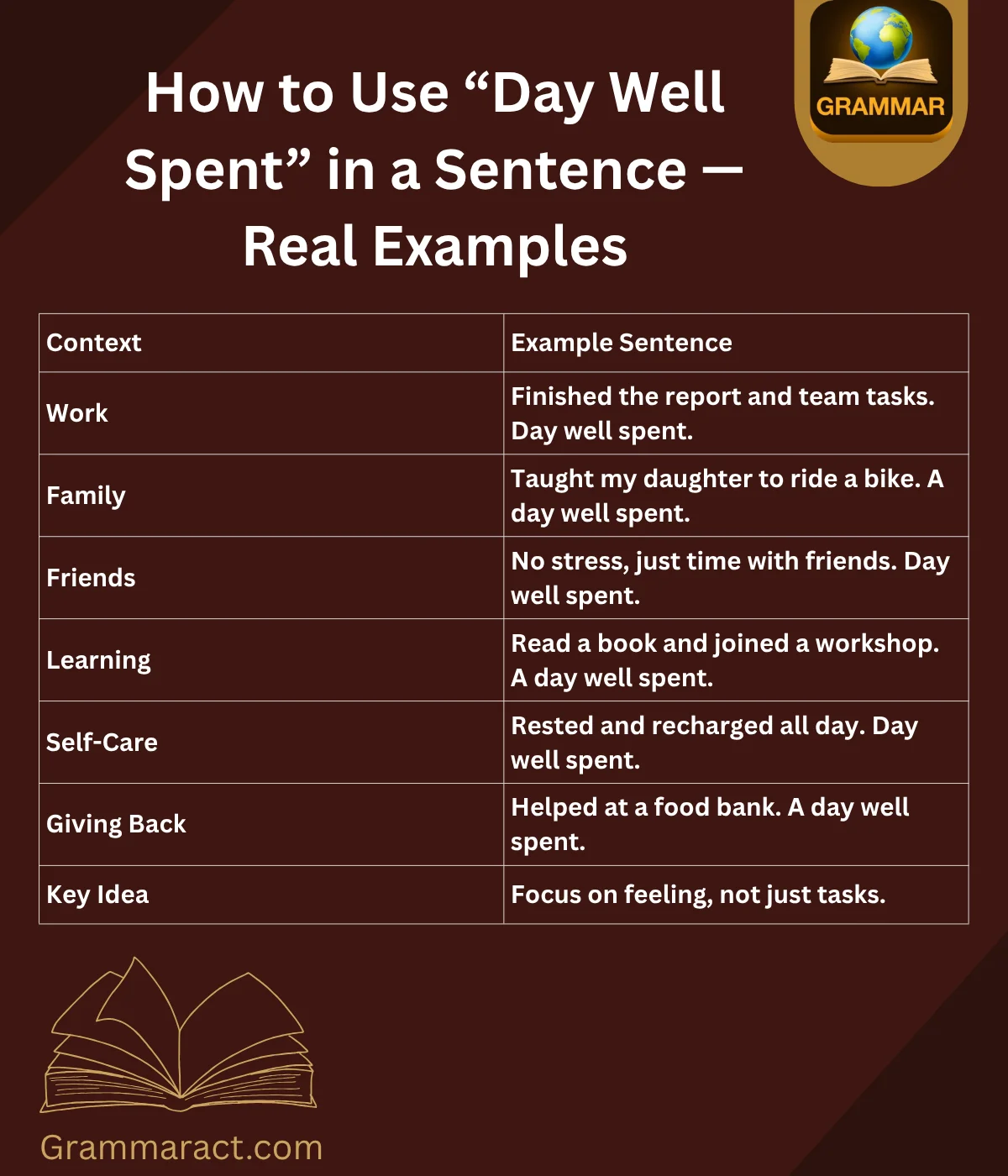
Seeing the phrase in action makes it click. Here are natural, varied examples showing how to use “well spent” in a sentence across different contexts.
Work & Productivity:
- “Finished the report, onboarded two new team members. Day well spent.”
- “After the client call and strategy session, that was a day well spent.”
Family & Relationships:
- “Spent the afternoon teaching my daughter to ride a bike. A day well spent for sure.”
- “No meetings, no stress — just quality time with old friends. Day well spent.”
Personal Growth & Learning:
- “Read half a book and attended a workshop. Definitely a day well spent.”
Rest & Self-Care:
- “Sometimes doing nothing is the most productive thing. Day well spent just recharging.”
Volunteering & Giving Back:
- “Volunteered at the food bank this morning. That was a day well spent.”
Notice something? Each example focuses on the emotional payoff — not just a list of tasks. That’s what makes this phrase so powerful.
Best “Day Well Spent” Captions & Quotes for Social Media
Social media runs on short, emotionally honest phrases. “Day well spent” is one of the most versatile caption choices out there.
🌿 Nature & Outdoor Days:
- “Hiked ten miles, forgot about work entirely. Day well spent. 🏔️”
- “Chased the sunset. Caught it. Day well spent.”
👨👩👧 Family & Friendship Days:
- “A day with the people who matter most. A day well spent ❤️”
- “Laughed more than I talked. Day well spent.”
💼 Work & Achievement Days:
- “Big goals, small steps, zero regrets. Day well spent.”
🧘 Rest & Self-Care Days:
- “Unplugged, recharged, and grateful. Day well spent. ☀️”
Inspiring Quotes:
- “A day well spent brings happy sleep.” — Leonardo da Vinci
- “A day well spent isn’t defined by how busy you were. It’s about how aligned your time was with what matters most.” — Anonymous
What Can You Say Instead of “Day Well Spent”? — Best Alternatives
Language loves variety. Here are the best “day well spent” alternatives — each with its own emotional flavor.
| Alternative | Best Used When | Tone |
|---|---|---|
| Time well spent | Talking about hours or weeks, not just a day | Neutral, flexible |
| A productive day | Output and work-focused contexts | Professional |
| A fulfilling day | Emotional or heart-centered experiences | Warm, personal |
| A worthwhile day | Balanced practical + emotional value | Versatile |
| Meaningful time | Deep personal significance | Reflective |
| A rewarding day | When effort clearly paid off | Motivational |
| A day put to good use | Emphasizing intentionality | Casual / semi-formal |
Tip: Use “productive” or “worthwhile” in professional settings. Save “fulfilling” or “meaningful” for personal reflections where emotion matters more.
When to Use It — and When to Avoid It
This phrase is versatile — but context matters. Knowing when to use “day well spent” (and when not to) keeps your writing sharp.
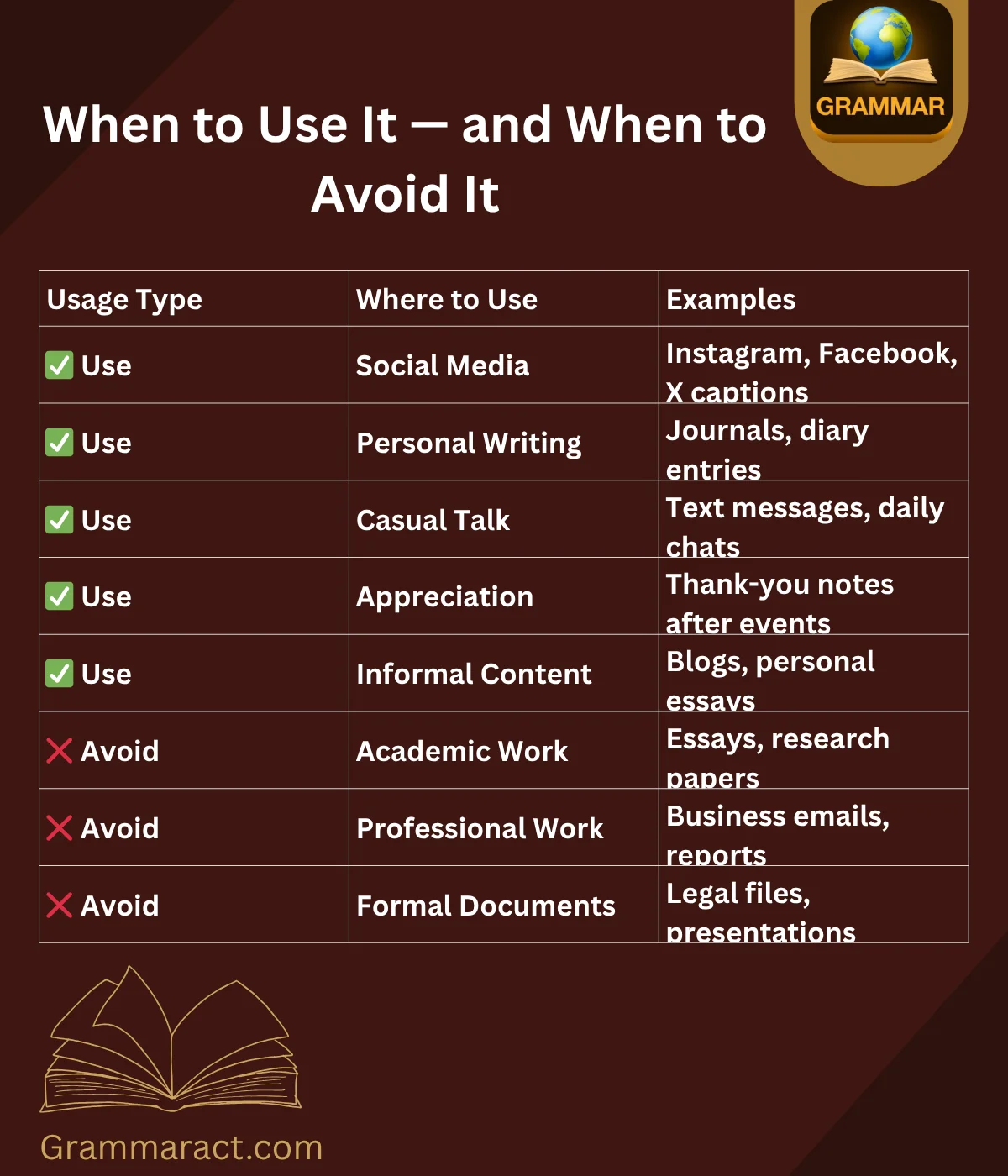
✅ Use it in:
- Social media captions (Instagram, Facebook, X)
- Personal journals and diary entries
- Casual text messages and conversations
- Thank-you notes after events or gatherings
- Personal blog posts and informal essays
❌ Avoid it in:
- Academic papers and formal essays
- Business reports and professional emails
- Legal documents and corporate presentations
In formal writing, replace it with specific language: “Yesterday’s session met all planned objectives” or “Time was used productively across all teams.”
Frequently Asked Questions
Is it correct to say a day well spent?
Yes — it’s grammatically correct. It follows the noun + adverb + past participle structure and is widely accepted in casual, personal, and social media writing.
What can I say instead of a day well spent?
Great alternatives include: a fulfilling day, time well spent, a productive day, a rewarding day, a worthwhile day, or a day put to good use.
How do you say “a day well spent”?
Use it as a standalone reflection (“Day well spent.”) or inside a full sentence (“That was a day well spent with my family.”). Both work naturally.
How do I caption a day well spent?
Keep it short and personal. Try: “No complaints. Day well spent. ☀️” or “Made memories, not excuses. A day well spent.”
How to use well spent in a sentence?
Follow the noun + well + past participle pattern. Example: “After the workshop, I felt it was time well spent.” Or: “That was money well spent on a great course.”
How do I caption a great day?
Try: “Grateful for days like this.” / “This is what living looks like.” / “Chasing good days — caught one. ✔️” / “A day well spent.”
What is another way to say well spent?
Solid alternatives: wisely used, productively spent, meaningfully invested, put to good use, worthwhile, or rewarding.
What is the best day quote?
Leonardo da Vinci said it perfectly: “A day well spent brings happy sleep.” It captures the full spirit of intentional, satisfying living in just seven words.
Final Thoughts
“Day well spent” is more than a caption trend. It’s a grammatically sound, emotionally honest phrase that captures what a good day actually feels like.
Use “spent” (never “spend”), skip the hyphen in postpositive position, and save it for personal and informal writing. When you need something more formal, reach for “productive,” “fulfilling,” or “worthwhile.”
Language grows with how people actually speak — and “day well spent” has more than earned its place in everyday English. Next time you wrap up a great day, use it with confidence.

Olivia Smith is the author and admin of GrammarAct, an informational grammar website. She writes clear guides, simple explanations, and helpful lessons to make grammar easy for everyone.