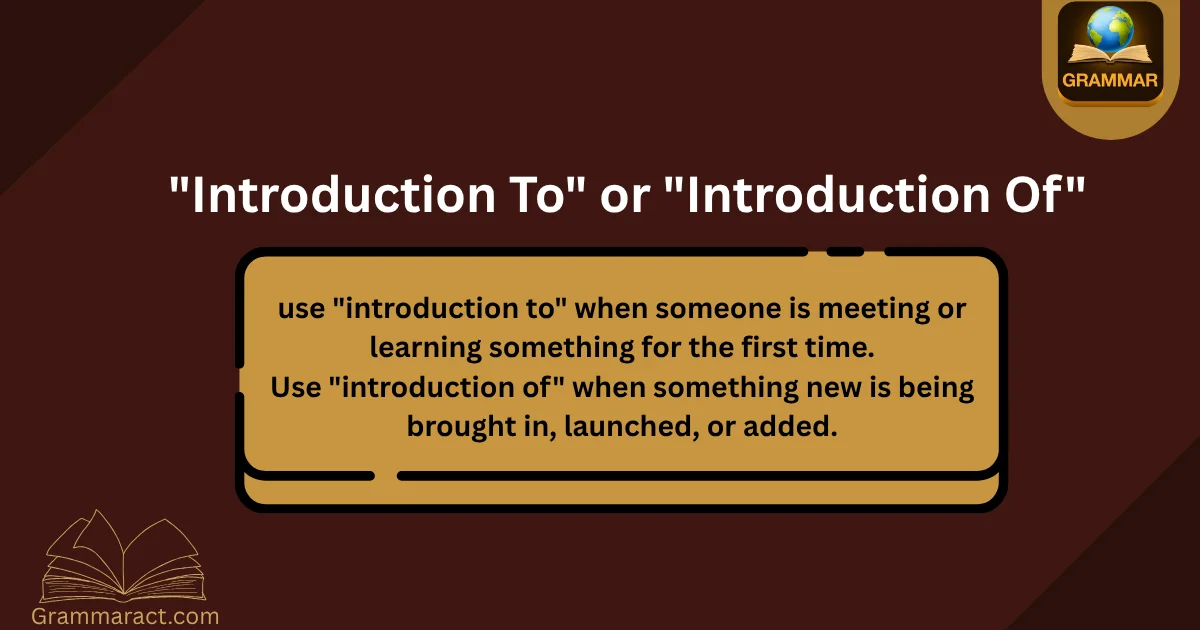
Many writers get stuck choosing between “introduction to” and “introduction of.” These two phrases look almost identical — but they mean very different things.
The quick answer:
What Do “Introduction To” and “Introduction Of” Actually Mean?
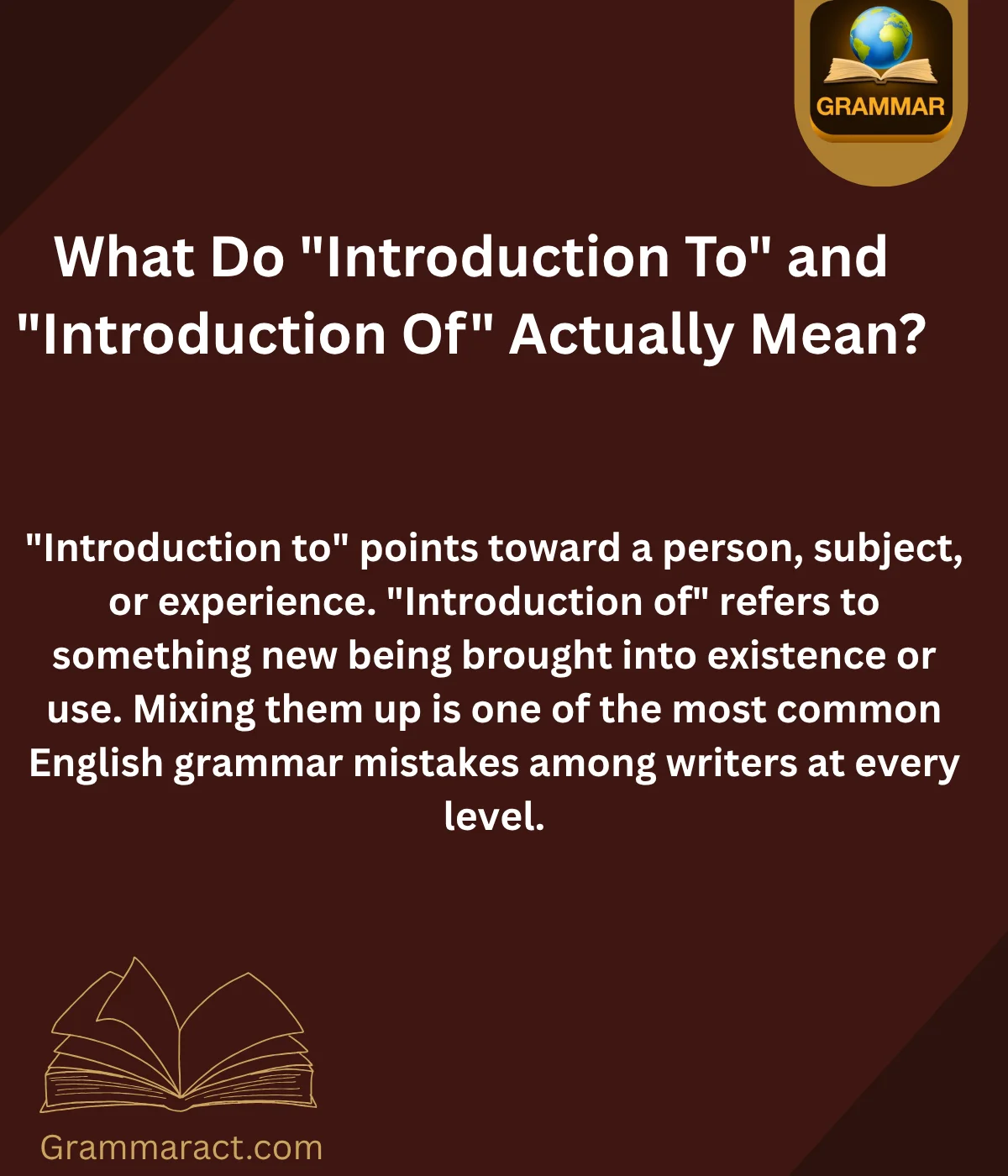
Both phrases use the word introduction — but the preposition changes everything. A preposition shows the relationship between words in a sentence.
“Introduction to” points toward a person, subject, or experience. “Introduction of” refers to something new being brought into existence or use. Mixing them up is one of the most common English grammar mistakes among writers at every level.
When to Use “Introduction To” – Rules & Examples
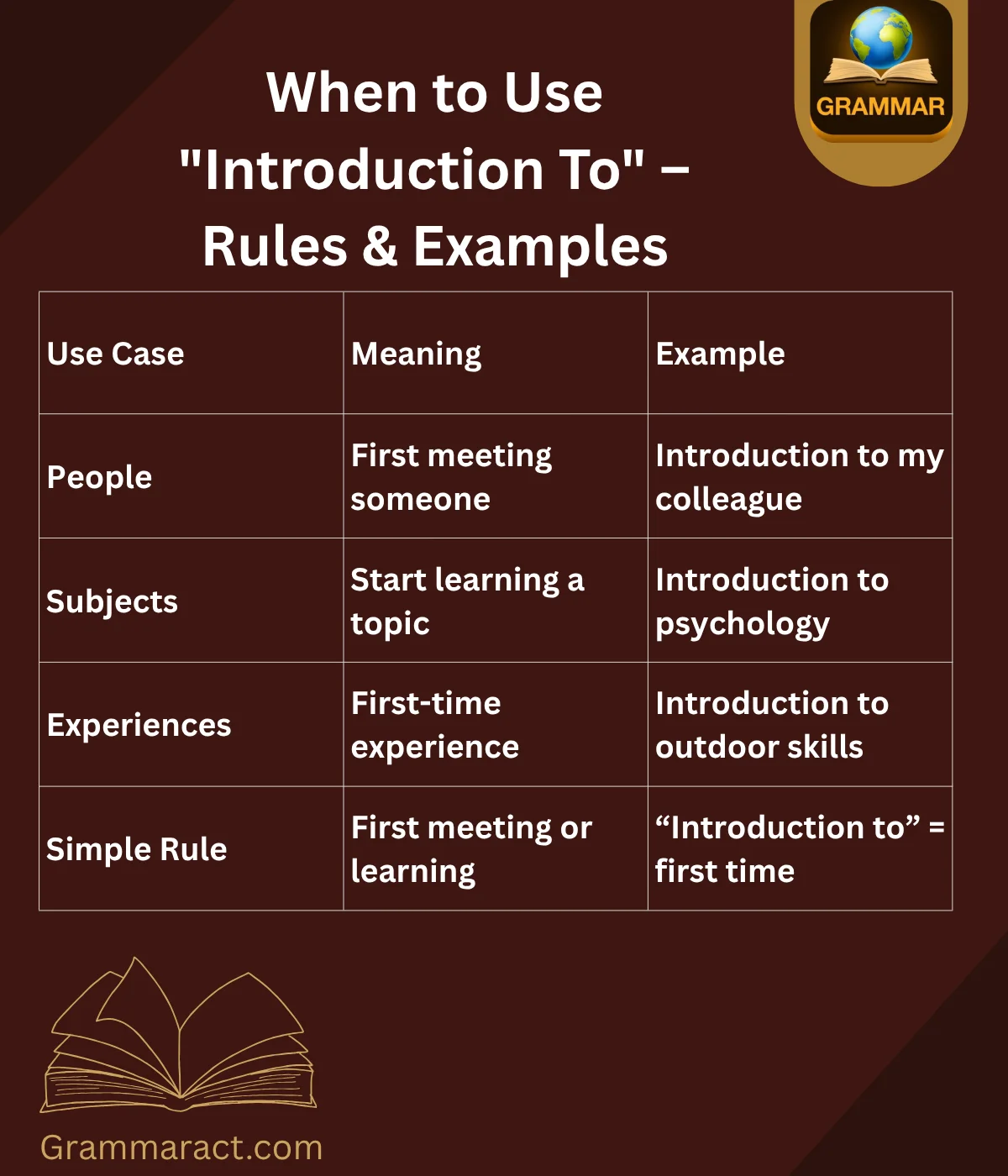
Use “introduction to” when something or someone is being presented, introduced, or encountered for the first time.
“Introduction To” for People
When you are introducing one person to another, always use “introduction to.” The phrase connects the person with whoever they are meeting.
- Example: “May I make an introduction to my colleague, Dr. Smith?”
- Example: “This is her introduction to the team.”
“Introduction To” for Subjects or Topics
When a course, book, or guide helps someone start learning a new subject, use “introduction to.” This is extremely common in academic and educational writing.
- Example: “This is an introduction to psychology.”
- Example: “She wrote an introduction to machine learning.”
“Introduction To” for Experiences
Use this phrase when someone is experiencing something for the very first time. It signals a first encounter or a brand-new experience.
- Example: “Summer camp was his introduction to outdoor survival skills.”
📌 Simple Rule: “Introduction to” = first meeting, first learning, first experience.
When to Use “Introduction Of” – Rules & Examples
Use “introduction of” when you are talking about bringing something new into a system, market, or situation.
“Introduction Of” for New Laws, Policies, or Systems
When a law, policy, or system is newly implemented or launched, “introduction of” is the right choice. It is common in formal writing, legal documents, and news articles.
- Example: “The introduction of the new tax policy caused debate.”
- Example: “The introduction of stricter regulations changed the industry.”
| Use Case | Meaning | Example |
|---|---|---|
| Laws & Policies | Used for new rules, systems, or regulations | The introduction of the new tax policy caused debate. |
| Regulations | Formal usage in legal and official contexts | The introduction of stricter regulations changed the industry. |
| Products | Used when launching something new in the market | The introduction of the iPhone in 2007 changed mobile technology. |
| Concepts | Used for new ideas or innovations | The introduction of AI tools transformed content creation. |
“Introduction Of” for Products or Concepts Being Launched
When a brand, company, or inventor brings something new to the market, use “introduction of.” This is the standard phrasing in business writing, press releases, and product announcements.
- Example: “The introduction of the iPhone in 2007 changed mobile technology.”
- Example: “The introduction of AI tools transformed content creation.”
📌 Simple Rule: “Introduction of” = something new is launched, passed, or added.
“Introduction To” vs “Introduction Of” – Side-by-Side Comparison
Here is a clear comparison to help you remember the difference at a glance.
| Phrase | When to Use | Example Sentence |
|---|---|---|
| Introduction To | First meeting, learning, or experience | “This is an introduction to biology.” |
| Introduction Of | Something new is launched or added | “The introduction of the vaccine saved lives.” |
| Introduction To | Presenting a person to another | “Allow me to make an introduction to our CEO.” |
| Introduction Of | A new law, product, or system | “The introduction of 5G changed communication.” |
Memory Trick: “To” points at someone or something you face. “Of” points at what was brought in or created. Think of “of” as ownership — something belongs to this new moment.
Other Prepositions With “Introduction” – On, For, About, In
People also ask about using other prepositions with “introduction.” Here is a quick breakdown of the most common ones.
“Introduction On” – Is It Ever Correct?
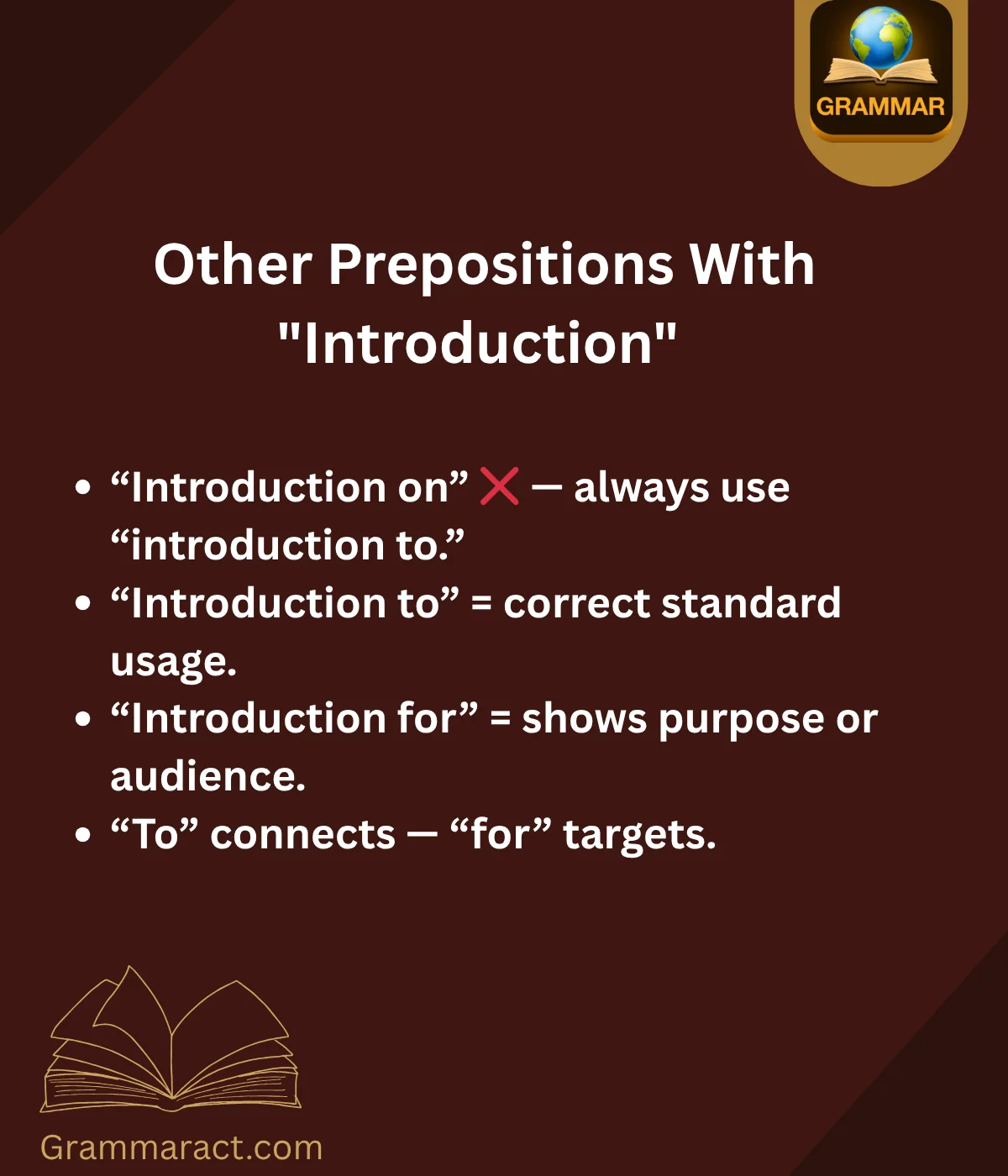
“Introduction on” is almost always incorrect in standard usage. You would not say “an introduction on grammar.” The correct form is always “introduction to grammar.”
The only rare exception is in very informal speech, such as “a chapter on” — but even then, “to” is the cleaner and more accepted choice.
“Introduction For” vs “Introduction To”
“Introduction for” is used in a different context — typically when describing a purpose.
But if you mean someone is being introduced to those employees, then use: “an introduction to the team.” The meaning shifts depending on which preposition you choose.
FAQ – Your Top Questions Answered
Is it introduction or introduction?
“Introduction” is the only correct spelling. There is no alternate correct form of this word.
How do you use introduction in a sentence?
Use it with the right preposition. Example: “This book is an introduction to modern history” or “The introduction of electric cars changed the auto industry.”
Which preposition is used with introduction?
The two most common prepositions are “to” and “of.” Use “to” for first meetings or learning. Use “of” for new launches or implementations. British English occasionally uses “of” more broadly, but the rules above apply in standard usage.
Is it an introduction or introductory meeting?
Both are correct but different. An “introductory meeting” is more specific and professional. “An introduction meeting” is informal and widely understood, though less precise.
When can I use “to” or “for”?
Use “to” when directing toward something: “introduction to the team.” Use “for” when describing purpose: “introduction for new hires.”
How do I say “introduction”?
Pronounced: in-truh-DUK-shun. The stress falls on the third syllable. It is a four-syllable word.
What does introduction mean?
An introduction is the act of presenting something or someone for the first time, or bringing something new into use. It can refer to a section of a book, a social presentation, or the launch of a new concept.
How do I start my introduction?
Start with a direct statement, a surprising fact, or a question. For example: “Most people confuse these two phrases — here’s the difference.” Keep it short, clear, and relevant to your reader right away.
What are the three sentences in an introduction?
A strong introduction has: (1) a hook that grabs attention, (2) a context sentence that sets up the topic, and (3) a thesis or main point that tells the reader what they will learn.
Final Verdict – Which One Should You Use?
If someone or something is being encountered for the first time, use “introduction to.” If something new is being launched, passed, or implemented, use “introduction of.”
These are not interchangeable. Choosing the wrong preposition changes the meaning of your entire sentence. When in doubt, ask yourself: am I meeting something or bringing something in?
That one question will always point you to the right answer.

Olivia Smith is the author and admin of GrammarAct, an informational grammar website. She writes clear guides, simple explanations, and helpful lessons to make grammar easy for everyone.